
The weekend field guide
What a juried craft fair application usually asks for
What a juried craft fair application usually asks for: images, booth photo, artist statement, process notes, category and fees, and how to make your entry stand out.
A juried craft fair application usually asks for photographs of your work, a photograph of your booth, a short description of your process, a statement about your work, your category, your contact details and a fee. Jurors usually look at the images first, so strong, consistent photographs matter more than any other part.
This guide explains each element, how jurors tend to read an application, how to prepare your images, what to write and what mistakes to avoid. Organizers set their own requirements, and the details here are common patterns rather than rules. Always follow the instructions on the application you are filling in.
How a jury works
A jury is a group of reviewers, often artists, craftspeople and experienced organizers, who look at applications and decide which makers to accept. They may score images against criteria such as originality, craftsmanship, consistency and presentation. They often review many applications in a short time, so clear images and a clear body of work help them see your strengths quickly.
Jurors are usually asked to make decisions on the quality of work and on the balance of the show, so a good application can still be declined because the fair already has many makers in the same category. A decline does not necessarily mean your work is not good. Keep applying, and use any feedback you receive.
Images of your work
Most applications ask for a set number of images of your work. Choose pieces that show the range and consistency of your style. Use clear, well-lit photographs with a plain background and no distracting props. Make sure the colors are accurate, the work is in focus and the pieces fill the frame. Show detail where it matters, such as texture, finish or joinery.
Keep images consistent in lighting and background so that jurors see your work and not the photography. Follow the application's rules on file type, size and labeling. Do not show work you did not make, and do not include images that are heavily edited. If the application asks for one image per piece, do not combine several into one.
Consistency beats variety
A set of images that look like they belong together, with the same light, background and framing, tells jurors you control your process. Mixed backgrounds and uneven lighting make even strong work look uneven.
The booth image
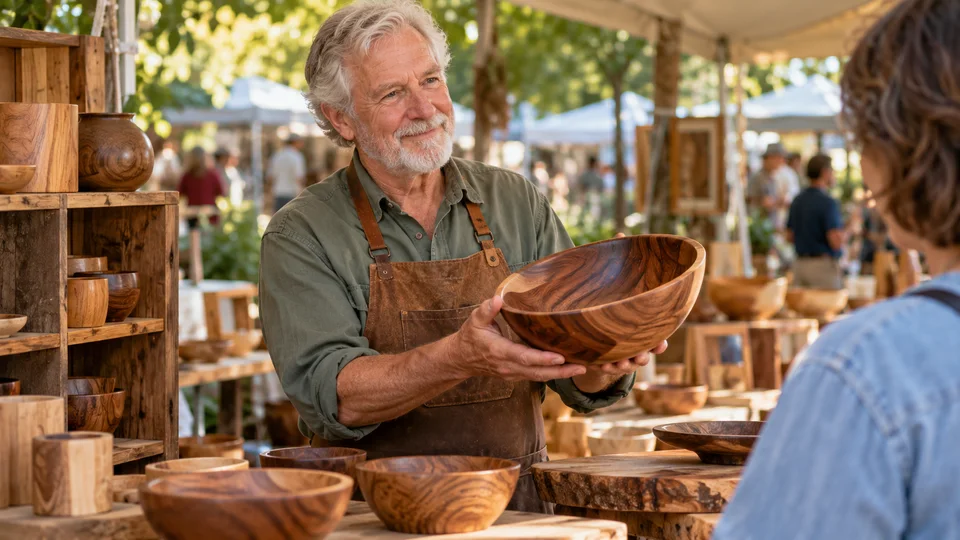
Many applications ask for a photograph of your booth. This shows jurors how you will present your work, how professional your display is and whether your booth will look good in the fair. Take the photograph in good light, with your products arranged as you would at the fair, and with signs and lighting visible.
If you do not have a booth yet, ask the organizer whether a mock-up or a photograph of a display at home is acceptable. Keep the booth neat, with your work at different heights and an uncluttered front. Show that you can handle the practical side of a fair as well as the making.
Process, statement and description
Applications often ask you to describe how you make your work. Be specific and honest. Name your materials and techniques, and say what you make yourself and what, if anything, others make for you. Many juried fairs require that work be made by the applicant, and misrepresentation can lead to removal.
A short statement about your work can help jurors understand your approach. Keep it plain, with no filler. Say what you make, how you make it and what makes your work yours. Avoid claims you cannot back up, and keep within the word limit. Ask a friend to read it, then check spelling.
Category, price range and other details
Applications ask you to choose a category, such as ceramics, jewelry, textiles, wood, glass, painting or mixed media. Choose the one that fits best. If your work spans categories, ask the organizer how to apply. Some applications ask for a price range, which helps the organizer balance the show.
You may also be asked for your contact details, your website or social media, proof of insurance, and whether you have exhibited before. Fill in each field accurately. If you do not have an item, say so rather than guessing. Remember that permits, sales tax and insurance requirements differ by place and fair. Ask the organizer. This guide is general information, not legal advice.
Fees, deadlines and common mistakes
Applications usually carry a jury fee and a deadline. Our guide on reading a jury fee and a booth fee explains the costs. Put the deadline and decision date in your calendar and submit well before the last day, since websites can be slow at the deadline.
Common mistakes include missing a required image, uploading the wrong file type, submitting poor-quality photographs, applying in the wrong category, ignoring word limits and not checking the instructions. Read the application twice and make a checklist. After you submit, keep a copy of everything.
Once you are ready to find fairs, browse the state pages, and see how to find craft fairs to sell at for a way to choose among them.
Frequently asked questions
How many images do I need?
The application tells you. Follow the number, size and format it specifies.
Do I need a professional photographer?
Not necessarily. Clear, well-lit photographs against a plain background can be taken with a good camera or phone. Consistency matters.
Can I apply with items made by others?
Many juried fairs require that work be made by the applicant. Read the rules, and be honest about your process.
What if I do not have a booth photograph?
Ask the organizer whether a mock-up or a photograph of a display at home is acceptable.
Why was I declined?
Reasons vary: the balance of the show, the number of applicants in your category or the images. Ask politely whether the organizer offers feedback.
Where do I find juried fairs?
Browse the state pages in this directory and open each listing's source to read the organizer's application information.
Put your plan into motion
Find your next show.
Use the listing's official source to confirm the latest dates, public hours and entry rules.
Find shows in this directoryKeep planning
More useful guides
Planning your first show: a visitor checklist
Choose a show that suits your interests, confirm the practical details and keep the organizer’s information handy before you travel.
Read guide : Planning your first show: a visitor checklist
Preparing to sell at a craft fair: a seller checklist
Confirm your seller application, table equipment, setup time and organizer terms before booking a place at a craft fair.
Read guide : Preparing to sell at a craft fair: a seller checklist
How to find craft fairs to sell at
How to find craft fairs worth applying to: search by region and type, read the organizer terms, check the audience and build a calendar before application deadlines.
Read guide : How to find craft fairs to sell at
Reading a jury fee and a booth fee for craft fairs
How to read craft fair fees: what a jury fee and a booth fee pay for, what is refundable, which extras to expect and how to compare the true cost of a craft fair.
Read guide : Reading a jury fee and a booth fee for craft fairs
Applying for holiday bazaars and craft fairs: a timeline
A practical timeline for applying to holiday bazaars and craft fairs: when to research, prepare photos, submit, hear back, make stock and set up your booth.
Read guide : Applying for holiday bazaars and craft fairs: a timeline